
About Sales Savvy Online
We charge for the diagnosis.
Sometimes it costs us the job.
We are a founder-led ecommerce agency in Sydney. We work out what has to change for your business to grow profitably, in what order, and we bring the team that does the work.
Who we take on
Work out in thirty seconds whether to keep reading
There is no point saying we are not for everyone without saying who. So here is the line, in both directions.
This is for you if
- You have a real product and a live checkout, whether it has sold ten units or ten thousand.
- You have ad data already, or you will fund a test budget so we can go and get some.
- You want to know what is actually wrong before you spend more money fixing the wrong thing.
- You will hand over your real numbers, including the ones you are not proud of.
It is not, if
- You do not have a product yet. There is nothing to diagnose.
- You are dropshipping and looking for a quick hack. That is not what this is.
- You want the outcome guaranteed before you start. You are paying for the answer, not for the answer being one you like.
- You want to be sold to rather than told. We are going to tell you.
The thinking underneath it
Everyone sells you the destination. Nobody prices the journey.
The agency was built on one idea and five laws underneath it. Mareike calls the idea Survivable Distance: every business has a distance to travel, from what it makes now to what it needs to make.
The destination is the easy part. Anyone can draw it, and most agencies will draw it for you in a proposal.
The journey is where businesses die. Stock ordered in January, landed in March, paid for in February, sold through June. A profitable month twelve that cannot pay a supplier in month three.
Survivable Distance is whether this business can cross that gap without running out of cash on the way. The whole business exists to answer that on paper, before you answer it with money.
Five laws
Five rules your numbers already obey
None of these is an opinion, and none of them needs you to believe it. Run each one against your own numbers and see.
-
Scale multiplies
Scale multiplies the economics it buys. More spend has to be paid for by more contribution, and by a cash path the business can actually fund. “We just need more sales” is not an explanation of which part improves.
-
The Product Tax
The avoidable cost of a product, offer or experience that falls short of what customers reasonably expect. The replacement ships. The refund lands. Count that before asking marketing to bring you more customers.
-
There is no good ROAS
There is no universally healthy ROAS, because every business needs a return that supports its own costs, cash timing and achievable volume. Your budget does not set the price. Needing a return does not make it available.
-
The Trough
A plan must fund its lowest cash point, not just its profitable destination. We want the amount, the date, and the reason it happens. The month at the end of the spreadsheet cannot lend money to the months before it.
-
You cannot pay a supplier in LTV
Future customer contribution supports today’s investment only when the business can finance the wait, and withstand that contribution arriving late or not at all. A forecast can be right about the total and still arrive too late.
The book
Find out if your plan runs out of cash before you do
Mareike Niedermeier
Survivable
Distance
A theory of
ecommerce viability
One idea · Five laws
First edition · 96 pages
Most growth plans look fine at the end of the spreadsheet. The trouble is the months in between, when the stock is paid for and the sales have not landed yet. The book follows one example store, month by month, so you can run the same checks on your own numbers before you find out the expensive way.
What you will be able to answer
- What can I afford to pay for a customer?
- How low will my cash go, and when?
- Which fix goes first, and what is it worth?
- What return do my ads actually need?
- Is my plan survivable, or only profitable on paper?
Why it exists
Why you keep getting sold the next tactic

Because the next tactic is easy to sell and a real answer is not. More ads. A new website. A fresh funnel. Every one of those is something a supplier already has on the shelf, and none of them needs anyone to ask what your business has to earn.
I know what bad advice costs because I have paid for it. So I wrote down what I check, every time, in the same order, and stopped letting anyone skip a step. You will feel that as friction. We ask for the numbers you are not proud of before we talk about campaigns, and six times in ten we finish a Sprint and tell you we are not the right next spend.
“I would rather lose a sale than waste someone’s money.”
What it costs us
Five places you will notice the difference
A theory nobody acts on is a blog post. These are the five places it costs us something, which is how you can tell we mean it.
-
We diagnose before we prescribe
Strategy, website, marketing, checked in that order. We do not touch the ad account until the first two hold.
-
We validate before you commit
Four weeks of real data on your business before anyone signs up to twelve months. It exists because we would rather lose the deal than lock you into something that will not work.
-
We publish what to expect
The plan is written down before you start. What we are doing, in what order, what each stage is meant to prove and by when. The early months are building data rather than returning it, and you are told that at the start, not in month three while you panic.
-
We do not chase
We qualify each other. If it is not a fit, we say so first. We turn work down, which is only possible because we are not trying to fill a roster.
-
We own the whole system
Most of the time the strategy, the site and the ads sit with three different people who never speak to each other, and nobody owns the number at the end. One team holds all four here, and reports on whether you made money.
Straight answers
The five questions you were going to ask anyway
Taken from recorded discovery calls, and answered here instead of making you sit through a call to hear them.
- “How would you even make money out of me?”
- We charge for the investigation, because it is the work. Then a fee for the build. Both are priced before you decide, and neither depends on you liking the report.
- “Is it a monthly retainer?”
- The Validation Sprint is $4000 + GST, paid upfront, for four weeks, and then it ends. What happens next is a separate decision you make with four weeks of your own data in front of you.
- “What happens after the sprint?”
- It ends on one verdict: green, amber or red. Green means the economics hold and we know what to build. Amber means part of it holds and the rest needs a retest. Red means scaling is not supported yet, and you will hear that in week four rather than month twelve.
- “My last agency failed me. How do I know you are different?”
- You do not, yet. That is what four weeks and $4000 + GST is for, rather than twelve months and $15,000 spent scaling the wrong thing.
- “What if it does not work?”
- Then the Sprint told you that in four weeks instead of a year, which is the entire reason it goes first.
The evidence
Check every number on this page
Anyone can write “the economic laws of business”, and nobody can check it, which is exactly why nobody trusts it. Every figure we use is traced to a data pull that can be re-run, carries its sample and its period, and states what it does not prove.
2 in 3
founders who ran our free diagnostic did not have a marketing problem. It was their website or their strategy.
- Website
- 47.5%
- Strategy
- 16.1%
- Marketing
- 36.3%
- 200+ ecommerce brands partnered with Over five years.
- $300M+ in client revenue generated Across those brands.
- $5M+ in ad spend managed Meta, Google and TikTok.
- $3M+ recovered from abandoned carts Automation and CRO-led email.
- 5,000+ ad creatives optimised From 10,000+ A/B tested variations.
- $200K+ invested in our own training Over the past two years.
Cumulative across all clients since 2019. Not a promise about what your business will do.
Recognition
Independently judged, so you can look them up
-
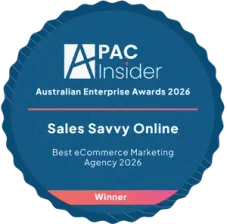 2026
-
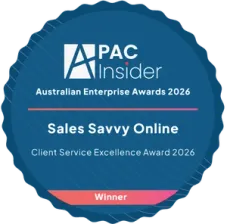 2026
-
 2025
-
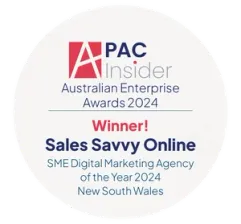 2024
-
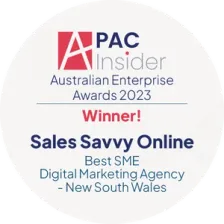 2023
Best Performing Marketing Agency in NSW, Business Insider, 2023 and 2024. Best eCommerce Marketing Agency, Australian Enterprise Awards, 2025 and 2026. Client Service Excellence, Australian Enterprise Awards, 2026. Mareike Niedermeier named Top Ten Marketer in Australia by the Australian Business Journal.
Official partners



Who does the work
You will know exactly who is on your account
More than 15 of us, across six time zones. The portraits came out of an AI photoshoot rather than a studio. Every person here is real and every likeness is theirs. Getting all of them onto the same continent for one morning was the harder problem.
-

Mareike
Founder and CEO
Built SSO on one principle: do right by the founder. Still the final filter on every strategy.
-

Holly
Client Account Manager
Your point of contact. Keeps everything on track, on time, and on the numbers.
-

Thomas
Paid Media Lead
Runs the paid engines. Turns cold ad traffic profitable, never bloated.
-

Seth
Web Developer
Builds fast sites that convert. No bloat. No broken checkouts. No excuses.
-

John
Head of Client Success
Owns the outcome on every account. If a project is going sideways, he is already on it.
-

Swapnil
Design
Turns strategy into creative that actually sells. Brand-true and scroll-stopping.
-

Geneva
Campaign Management
Orchestrates every campaign from brief to launch. Nothing ships without her eyes on it.
-

Marie Cris
Marketing Executive
Drives SSO’s own marketing. The face, the feed, the follow-through.
-

Joy
Graphic Design
Designs visuals that earn the scroll-stop and the click. Conversion-led.
-

Sohaib
Video Editor
Cuts video that holds attention past second three. Where most ads die.
-

Bousmida
Web Developer
Builds, ships, fixes. Pages just work, and they work fast.
-

Chelsea
Social Media Marketing
Owns the feed. Turns daily content into real pipeline.
-

Priyanka
Web Developer
Wires the back end. Forms, tracking, integrations, all silent, all solid.
-

Jenrick
Marketing Support
The campaign multiplier. Already on it before anyone asks.
-

Indie
Chief Floof
Morale department. Enforcer of snack breaks. Has never missed a meeting.
What clients say
Take theirs, not ours
These are private emails, so they publish without names. Where a client has given us permission to use theirs, you will find them on the homepage and on Google. The ones worth reading here are not the compliments. They are the people who did not buy, the people who left, and the work we were paid to do that ended in do not do this.
(opens in a new tab)Before any money changed hands
“You are the first one to have done some homework on it and recognised the real issue and you absolutely nailed it!”
“Such a pleasure to meet you and to finally discover someone in your industry who does do their homework and really knows their stuff.”
“The contrast between overall LTV and repeat customer LTV was pretty eye-opening.”
“Thank you for your time today, I really valued the content of the meeting and your honesty and full disclosure approach.”
They did not buy, or they left
“Thank you for your time last week. Breaking all of the elements down has been incredibly helpful in identifying a potential path forward.”
“I genuinely appreciate your guidance and the time you’ve invested in helping us work through the options.”
“This decision has absolutely nothing to do with you, Sales Savvy’s performance, or the quality of your service. You’ve been incredible, and I deeply appreciate everything you’ve done.”
“A strong negative response is almost as good as a strong positive. As you said it means we do not put any time or effort going to the show next year.”
On the work
“The copy is great, no major changes there (not something I have said often in my 35 years in marketing!).”
“It was fantastic to discuss and critique the strategy and it’s exciting to move forward.”
“I received another email from Meta this morning, it looks like you really gave them a shake up. I really appreciate your time and effort going in for me to sort this mess out.”
“We have had our best month in a while and I feel like things continue to get better.”
Ready
You have read the argument. Now run it on your own numbers.
The Growth Bottleneck asks a short set of questions and gives you a read on where your business is most likely stuck. On screen, no call attached. If you already know the business works and it simply will not grow past where it sits, take the other door.